The Tandana Foundation
Menu
    • External link opens in new tab or window
    • External link opens in new tab or window
  • External link opens in new tab or window
    • External link opens in new tab or window
    • External link opens in new tab or window
    • External link opens in new tab or window
    • External link opens in new tab or window
    • External link opens in new tab or window

Remote Connection


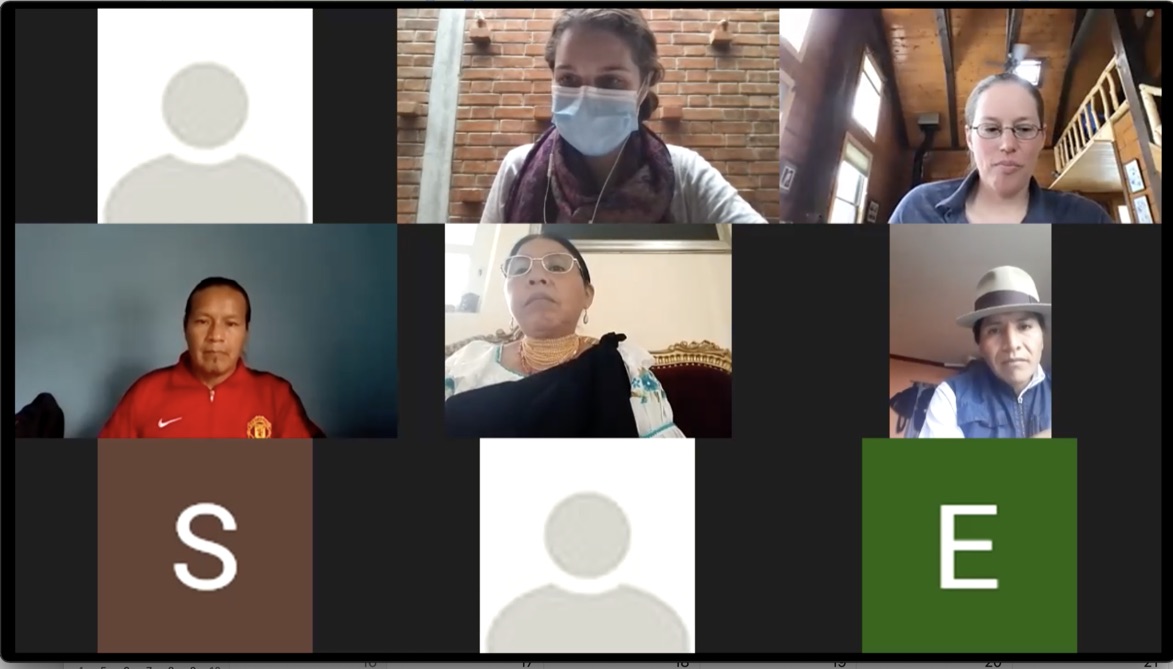
Even if you can’t travel, you and your students, club, or group can interact in multiple ways with Tandana friends from Ecuador and Mali, building global connection and awareness.  Student exchanges can allow for mutual learning, while booking guest speakers shows that you value the knowledge and experience of community leaders from Mali and Ecuador.  Cultural activities are fun and interactive ways to gain insight into Kichwa Otavalo culture, while virtual immersions can give you the next best thing to actually being there.  Remote internships allow you to contribute to meaningful transnational work and to connect with team members in Ecuador.  For individuals, we offer Virtual Ventures that you can sign up for on your own or with friends.


Cultural Activities

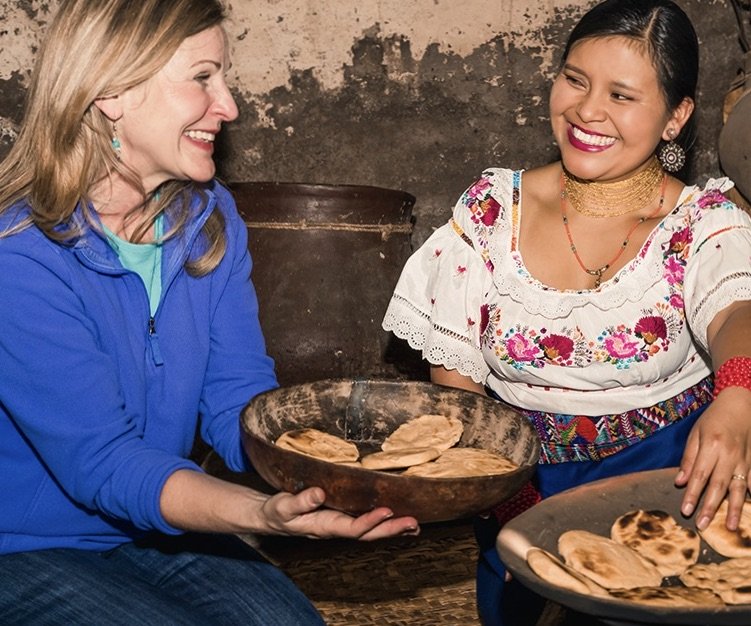
The Tandana Foundation offers interactive remote cultural activities that give a glimpse into everyday Kichwa life in Otavalo, Ecuador. Sign up individually when available or anytime as a group!  For your group, you can choose a variety of sessions to participate in, each with a different educational and culturally relevant theme.  Prices are listed below for groups of 12 or 16--contact us at info [at] tandanafoundation.org for pricing for other group sizes and to schedule your activities.  All fees include an introduction, interpretation as necessary, and supplies for your whole group shipped to one address.  For individuals, supplies are not included.


Activities:


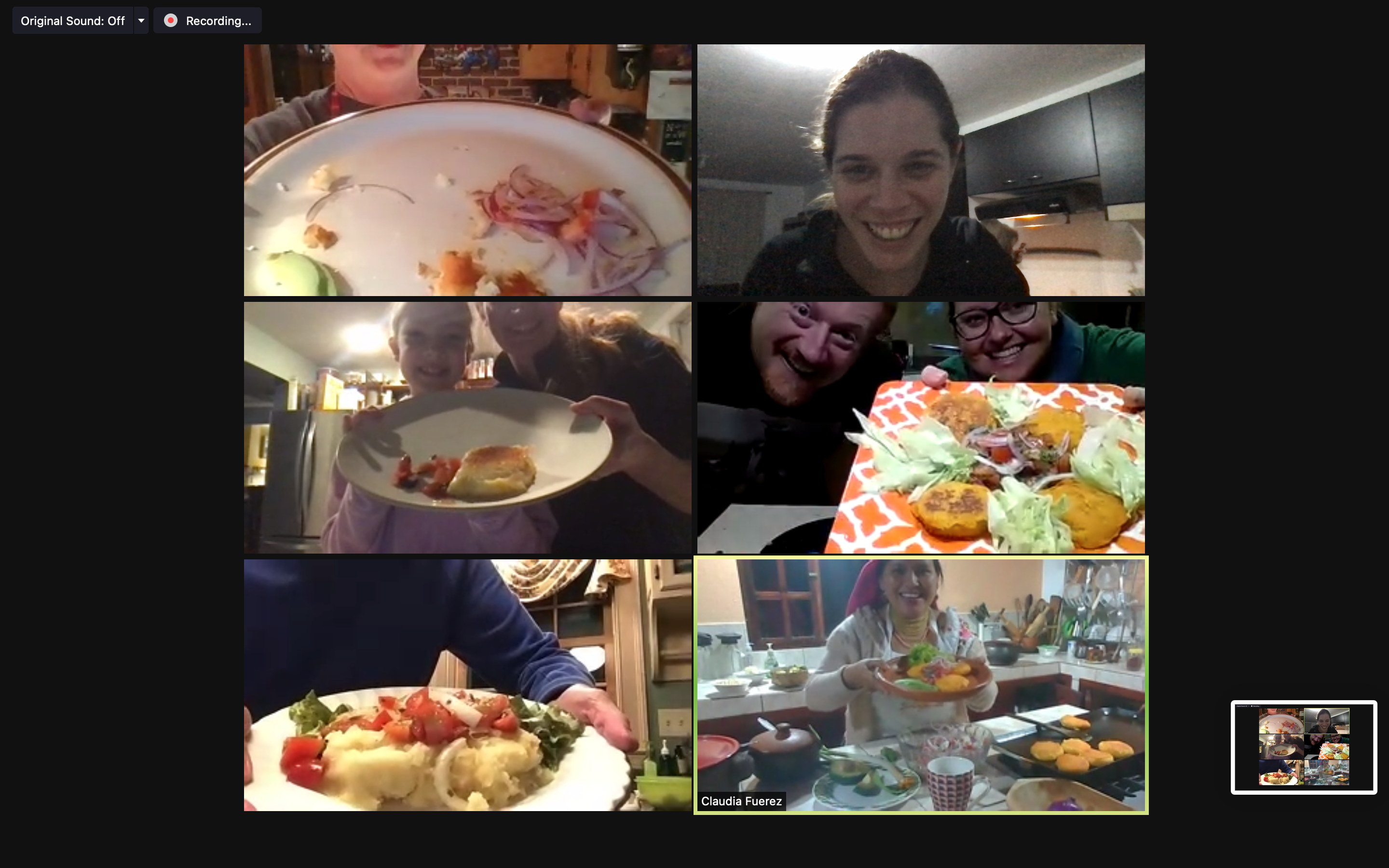
Kichwa Otavalo Cooking Class

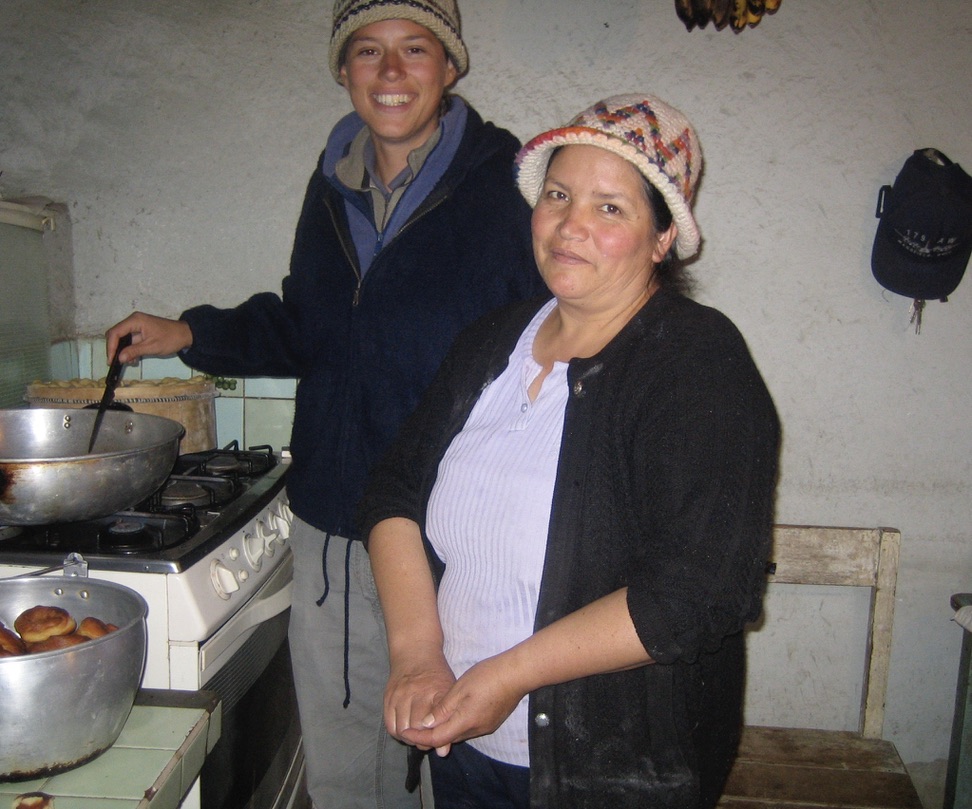
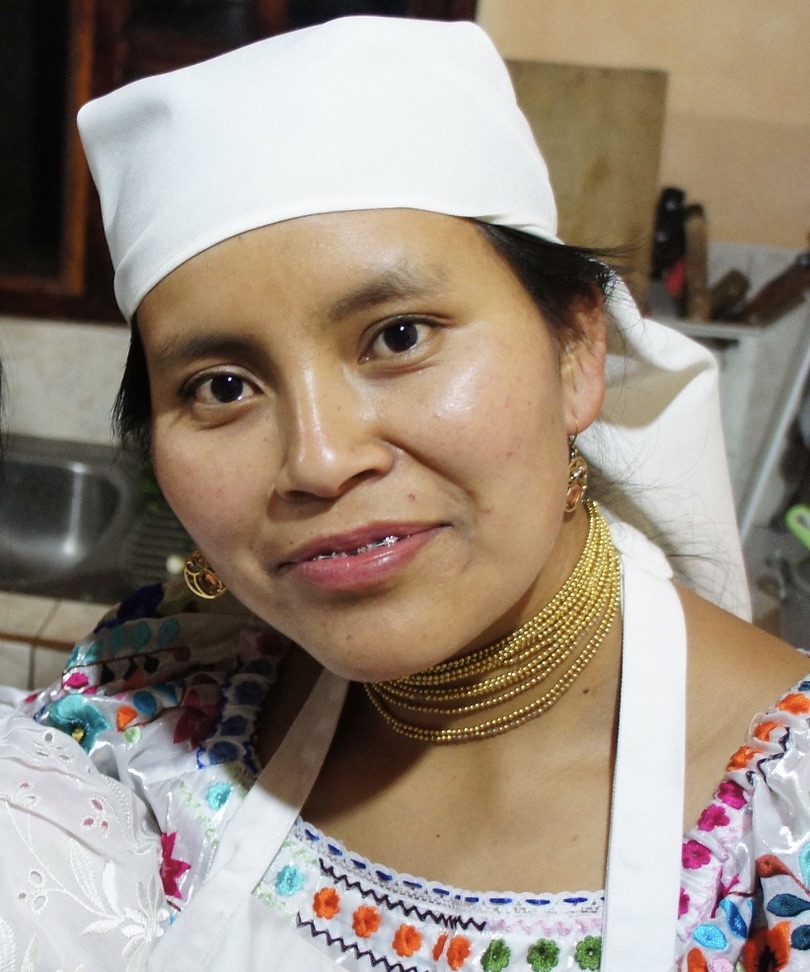
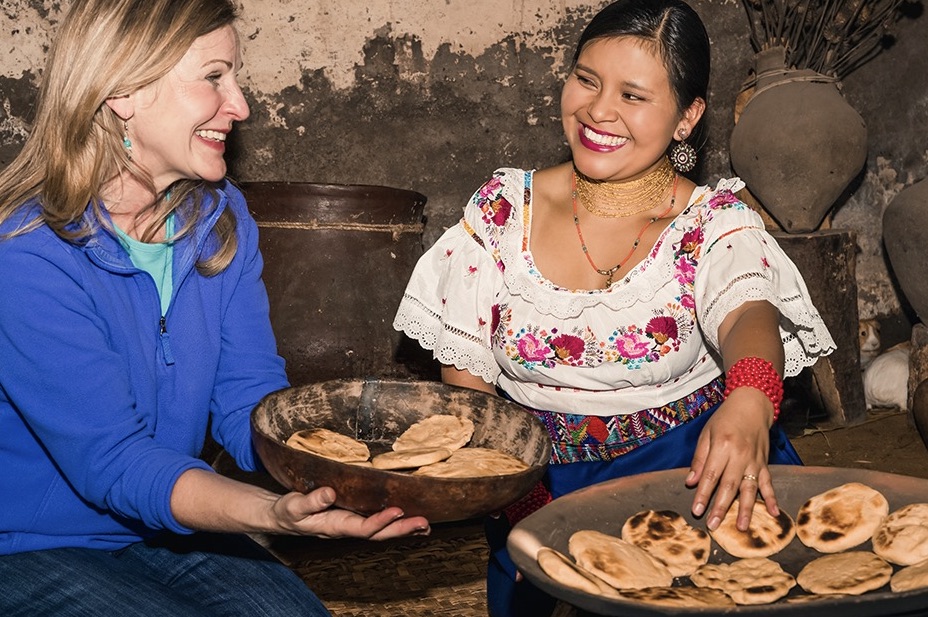
Claudia Fuerez, proprietor of Kawsaymi Cooking School, will teach this interactive cooking class in which your group will prepare Quinoa Tortillas and Salad in Otavalo Kichwa style.  Group fee includes all of the ingredients shipped to one address (contact us if you prefer to provide your own ingredients).  Claudia will guide you through the preparation process and also explain the traditional significance of quinoa.  Afterward, enjoy the delicious meal you have made!


For a group of 12: $389.99

For a group of 16: $499.99


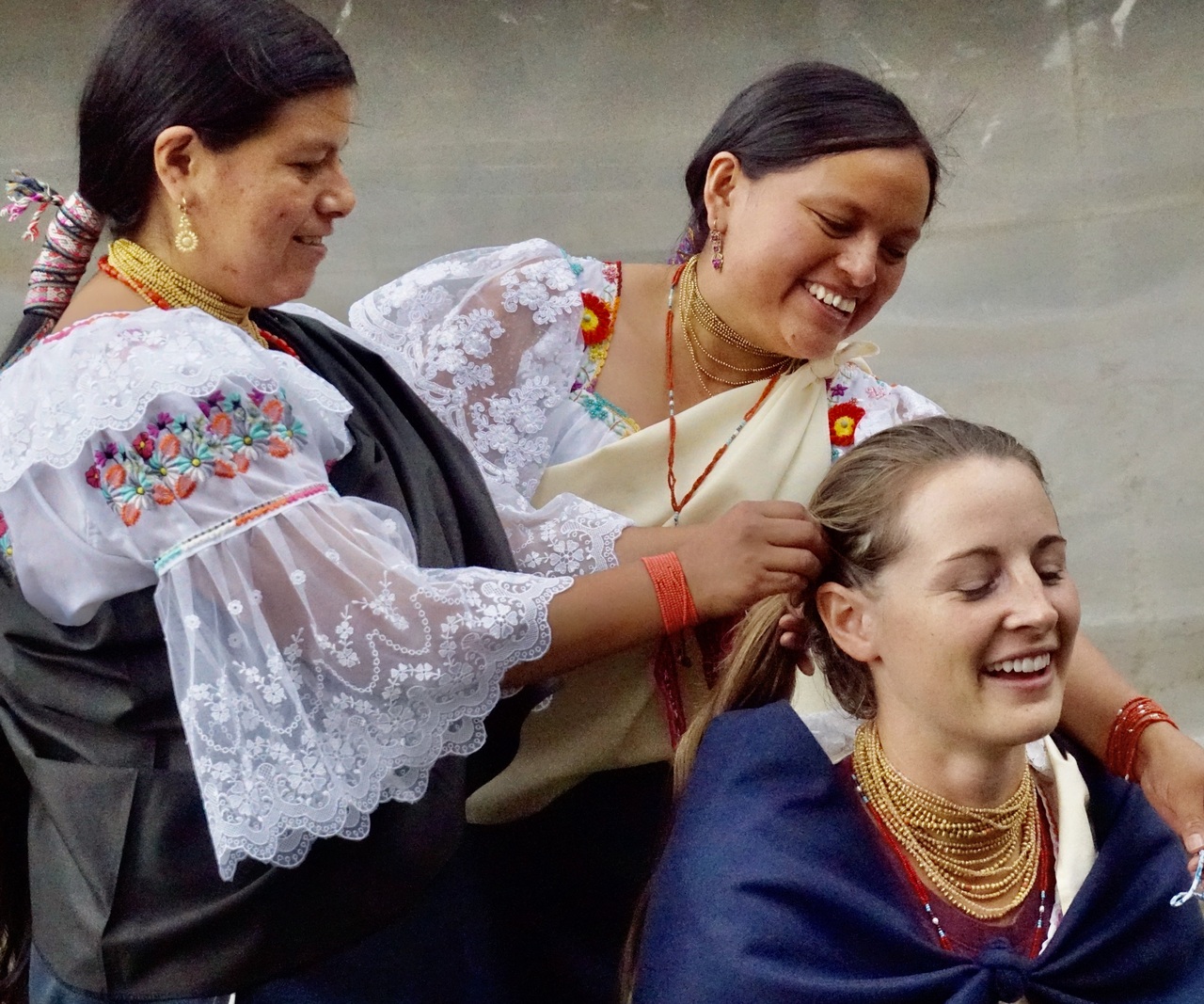
Kichwa Otavalo Dress

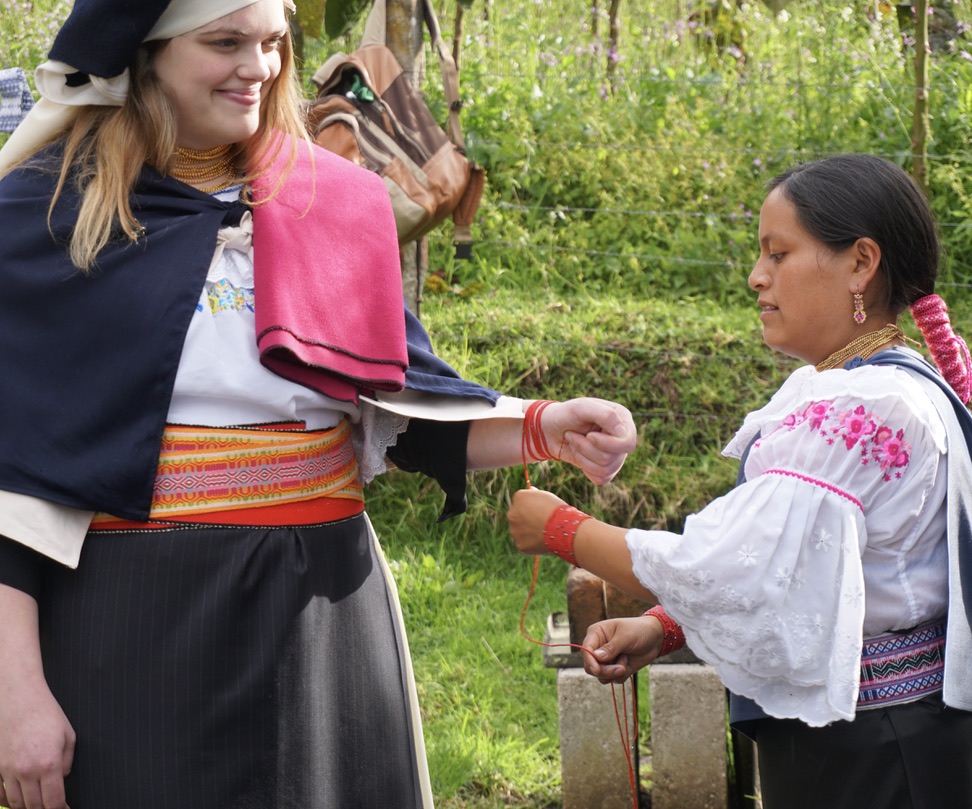
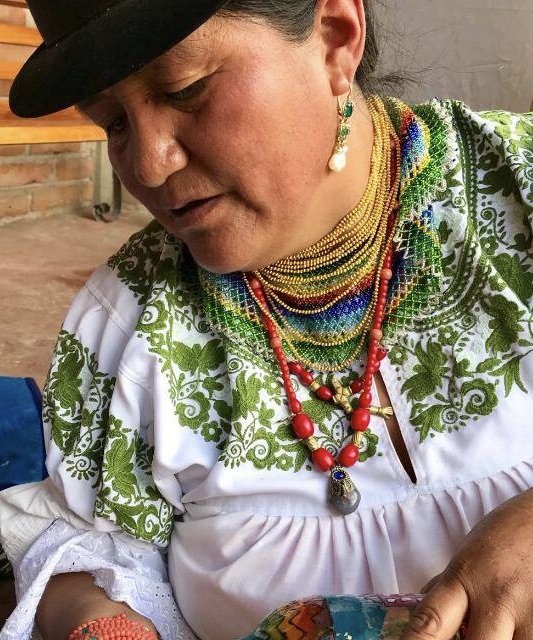
Margarita Fuerez, Tandana Foundation accountant, will explain the history and current fashions of Kichwa Otavalo dress, which is an important marker of indigenous identity.  You will also learn about jewelry and embroidery and the intersection of their economic relevance with fashion.  Fee includes a few supplies so that you can try a few small aspects of Otavalo dress yourself. 


For a group of 12: $389.99

For a group of 16: $499.99


Garden and Medicinal Plants Tour

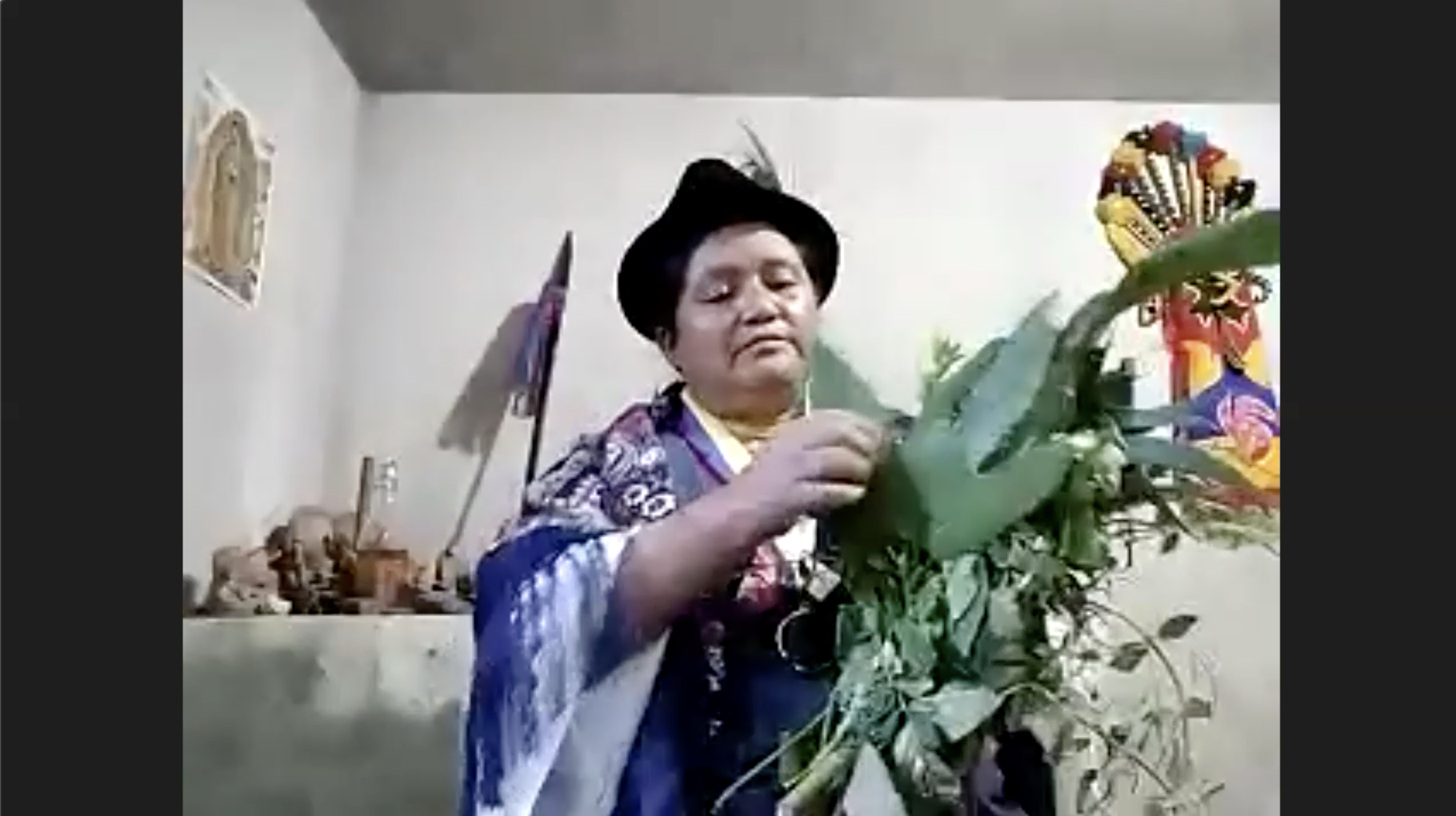
Alexandra Aguilar, leader of Pakarinka Learning Center, will guide you through the center's garden, describing the uses of medicinal plants and herbs.  You will have a chance to make your own herbal teas, using several herbs we will send you, and sample their flavors.  Later you can find some of these plants in your grocery store or a local garden and will know how to use them to support healing.


For a group of 12: $389.99

For a group of 16: $499.99


Andean Music

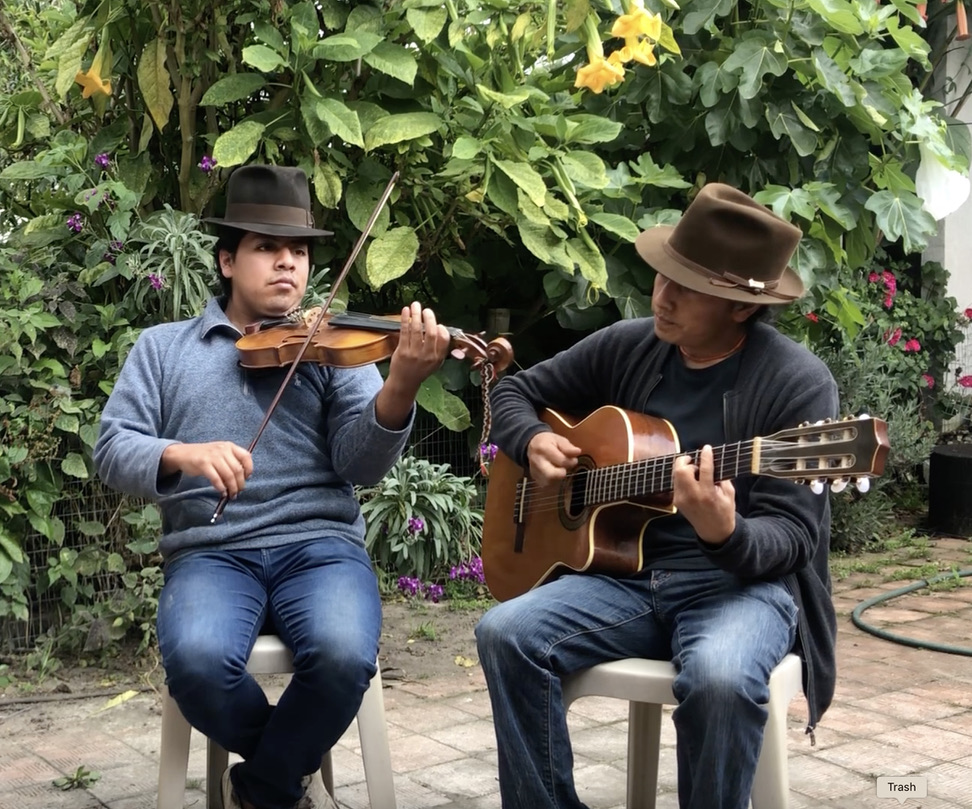
Experience a variety of Andean music with musicians from the Otavalo area. Learn about different genres, songs, and instruments used for entertainment and ceremonies. If you wish, you can make it more interactive by requesting to play along with the musicians while muted in your own home.  This event is perfect for all music lovers!


For a group of 12: $389.99

For a group of 16: $499.99


Otavalango Museum Tour

Take a virtual guided tour of the Otavalango Kichwa Living Culture Museum with curator Luzmila Zambrano.  She will explain festivities, ceremonies, games, and the history of the factory where the museum is located.


For a group of 12: $299.99

For a group of 16: $399.99


Colada Morada and Wawas de Pan - An Ecuadorian All Souls Day Tradition
In this session Cecilia Sierra will share her recipe for Colada Morada (purple drink), show how to make wawas de pan (bread babies), and talk about how Ecuadorians celebrate this holiday all over the country as well as some traditions specific to indigenous Kichwa culture.  Ingredients for your group will be shipped to one address.


For a group of 12: $389.99

For a group of 16: $499.99


Make Your Own Makiwatanas - Traditional Kichwa Otavalo Bracelets

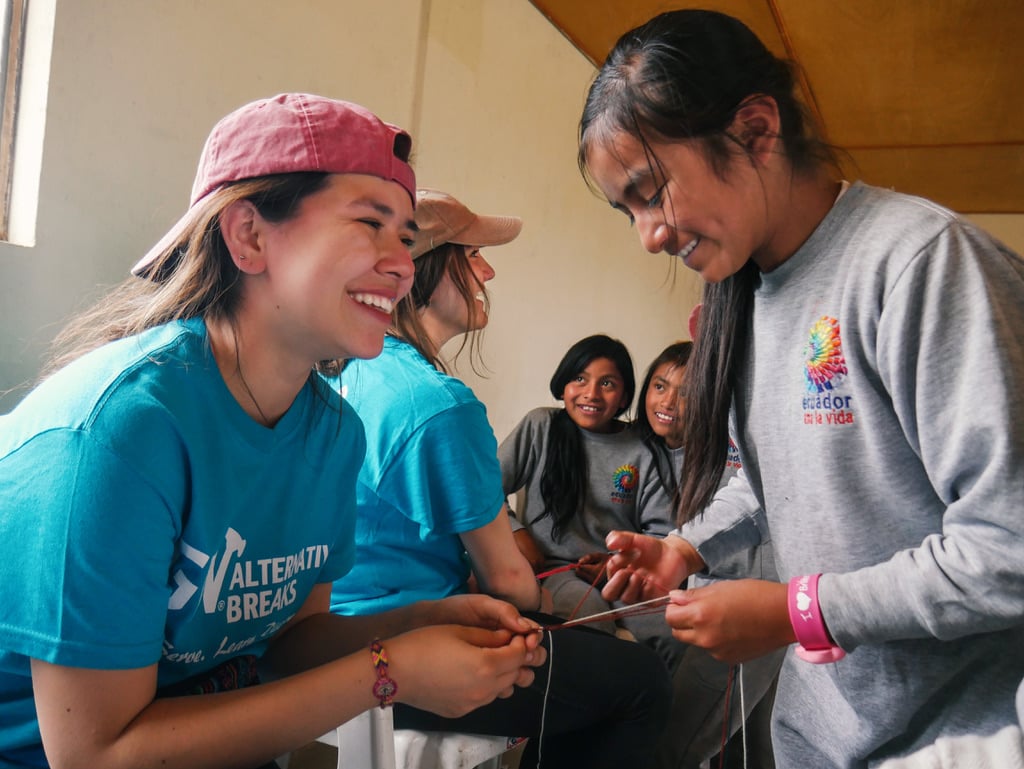
In this session, Margarita Fuerez, former Tandana Foundation scholarship recipient and current staff member, will teach participants how to make makiwatanas or manillas (traditional bracelets). She will also talk about the significance of the bracelets and how styles have changed over the years.  Supplies will be provided for your group.


For a group of 12: $389.99

For a group of 16: $499.99


Beekeeping in the Ecuador Highlands

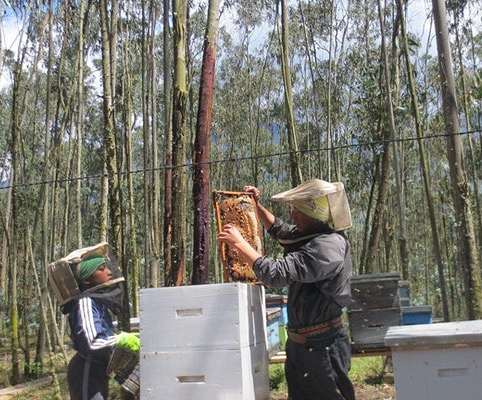
Learn about beekeeping in the Ecuador Highlands with experienced apiculturist Rumi Santillan. He will demonstrate how he works with his bee colonies and share how beekeeping went from being a hobby to becoming a family activity and local business.


For a group of 12: $299.99

For a group of 16: $399.99


Kichwa Cotacachi Dance

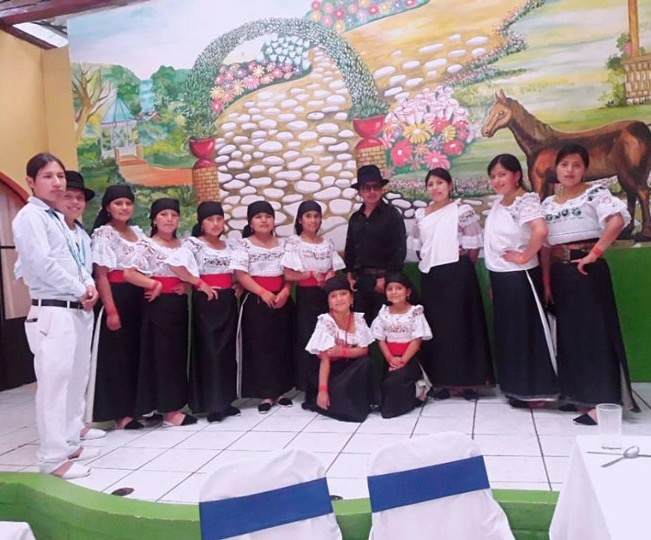
Experience traditional dances of the Ecuador Highlands with Sumak Sisay, a youth dance group from the San Pedro de Cotacachi community. Learn about the meaning behind traditional dances done in the Andes, watch the group perform, and hear about how young people connect with their Kichwa culture through dance.


For a group of 12: $389.99

For a group of 16: $499.99


Kichwa Otavalo Games


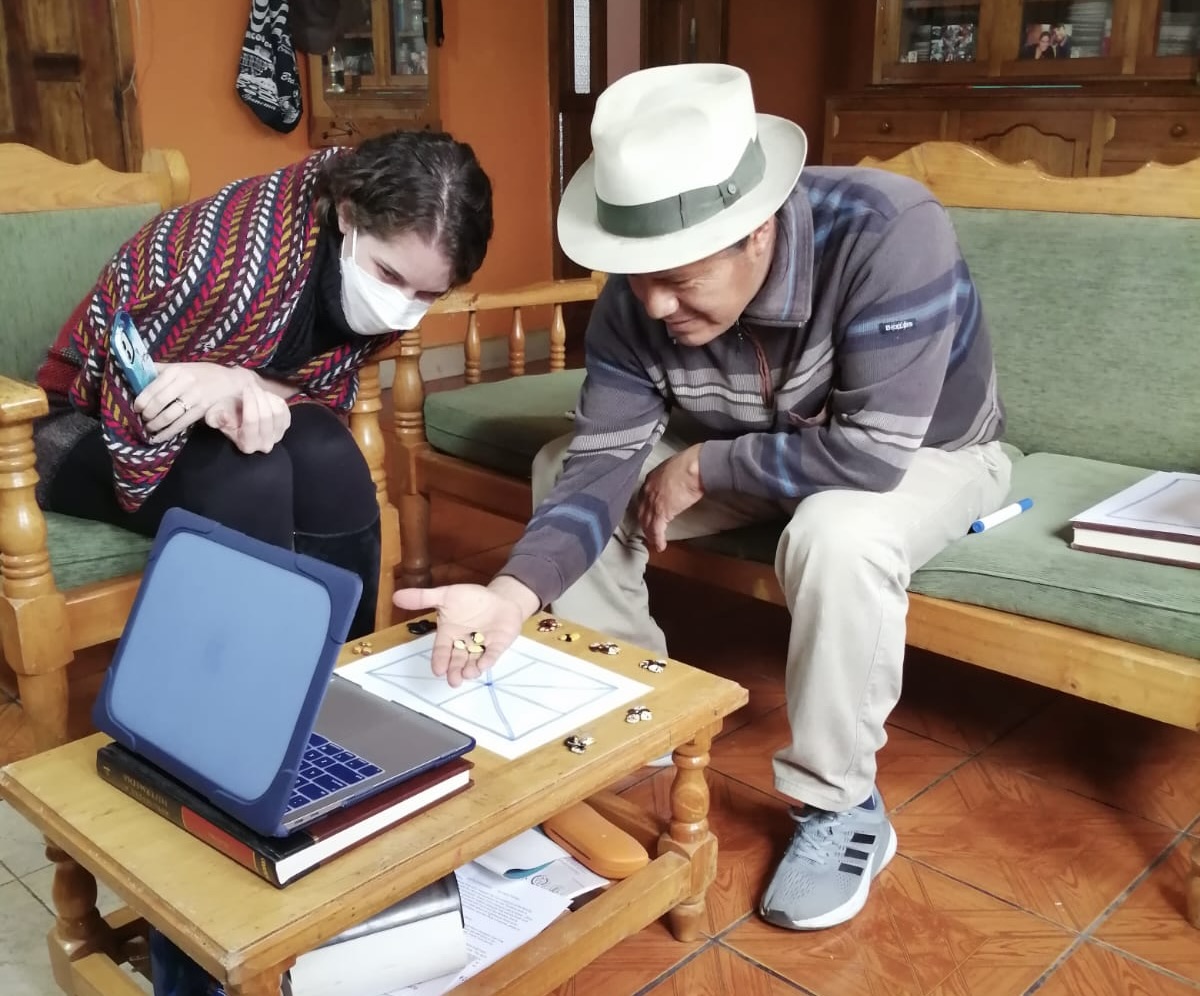
Learn several games traditional to Kichwa Otavalo culture.  You can choose to focus on calmer games such as Triki-Traka or more active games, depending on your preference.  Learn about the history and significance of the games and have fun playing them. Supplies for your group will be mailed to one address.


For a group of 12: $389.99

For a group of 16: $499.99


Storytelling and Legends from Otavalo, Ecuador

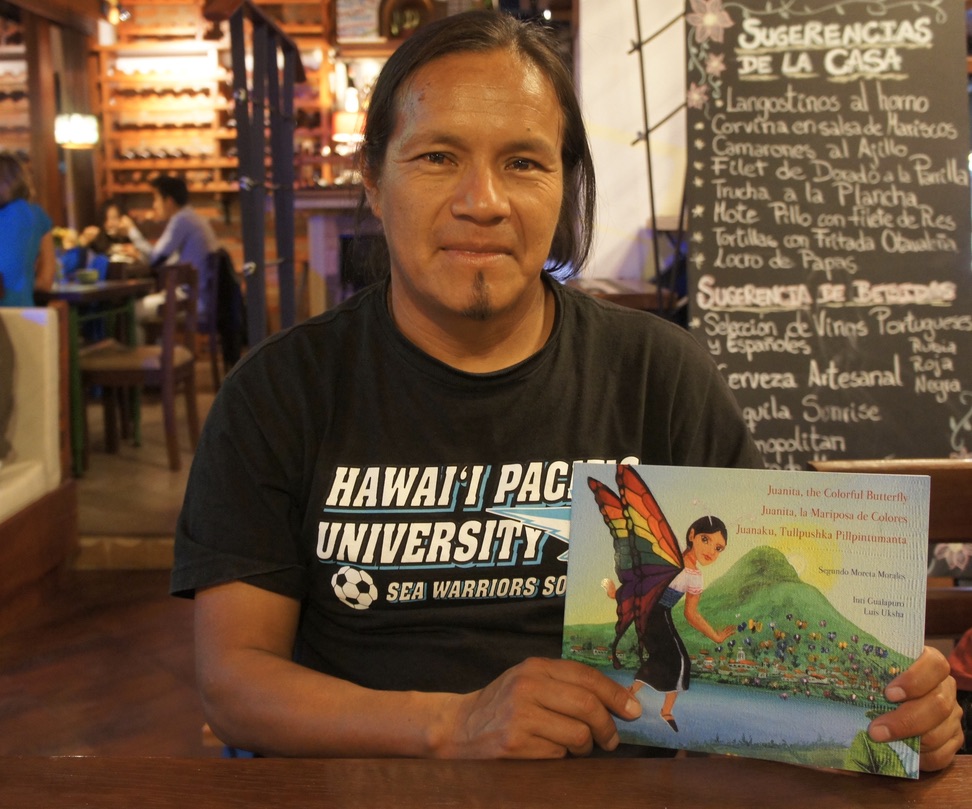
During this event, Segundo Moreta will share about how he came to write a children's book in Kichwa, the local indigenous language. In addition to a live reading of the book Juanita, the Colorful Butterfly, he will also share a few local legends that have been passed down orally from generation to generation.


For a group of 12: $299.99

For a group of 16: $399.99


Speakers' Bureau


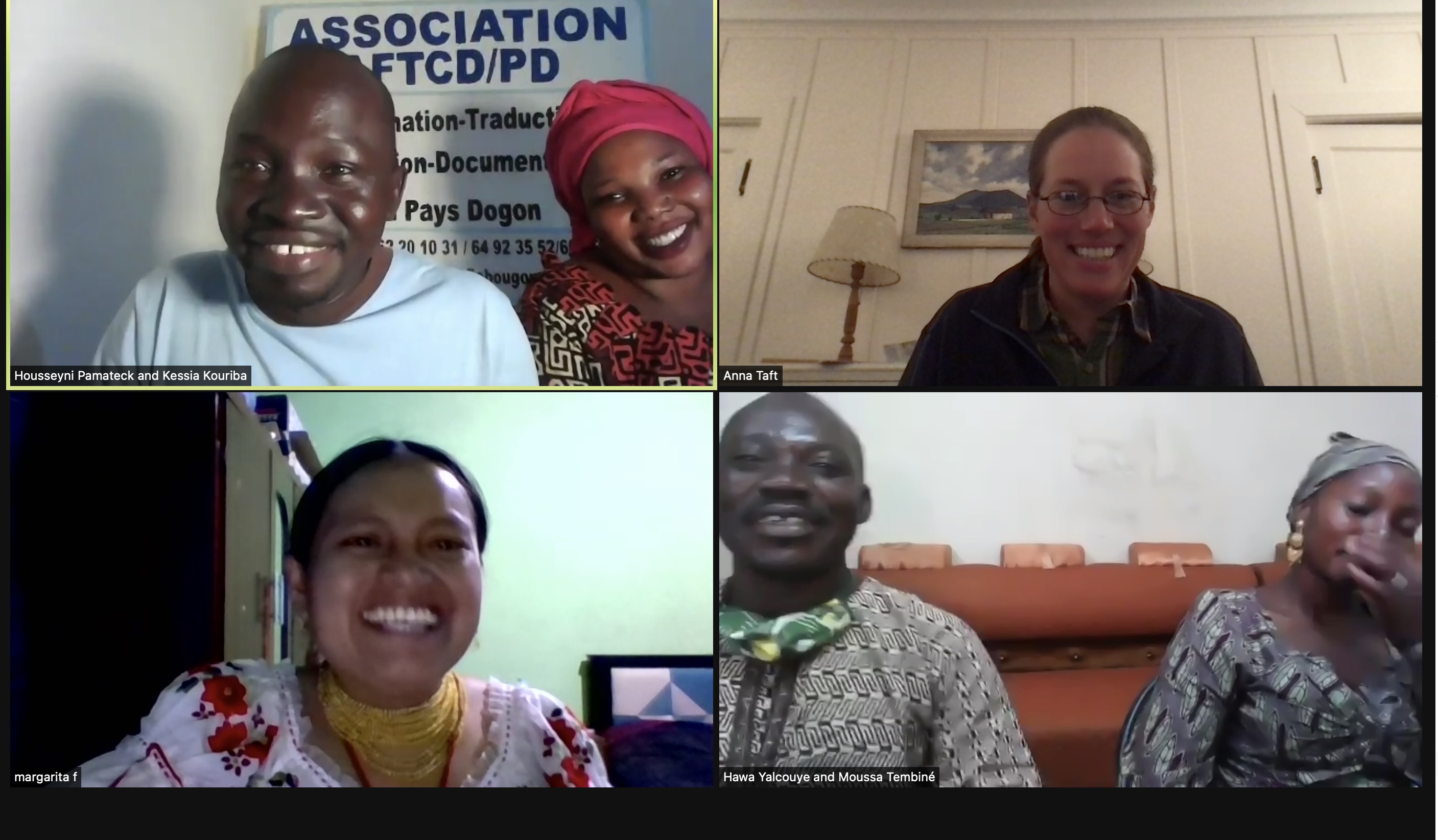
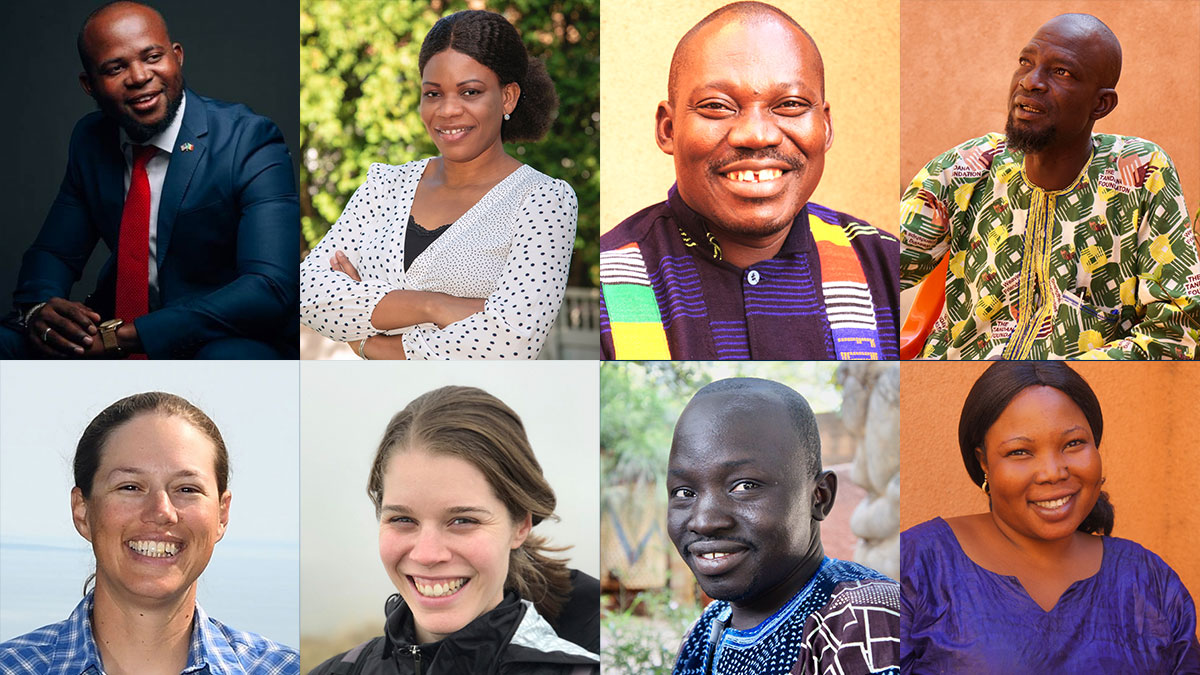
The Tandana Foundation offers a remote speaker’s bureau that can bring multiple unique perspectives on real-life issues to your classroom or meeting.  Drawing on our long-term relationships with community members in Ecuador and Mali, we can help you select the speakers that will illuminate the themes of interest to your course or program, sharing the experiences, efforts, and knowledge of local leaders.  Most speakers will require interpretation into English, and we provide this service, included in the fee.  We also provide background information to help your students understand the context, an introduction for each speaker, and resources to further explore the topic afterward.  This is a chance to show your students the value of local knowledge from Mali and Ecuador and to balance textual and theoretical learning with specific experiences.  Scheduling is subject to availability of each speaker. Contact us at info [at] tandanafoundation.org to make arrangements.


Fees:

All packages include background information for preparation, introduction, speaker, and list of resources. If simultaneous interpretation is required, please add $150 per session.  Contact us for details about languages each speaker can offer. 


1 speaker – $250 without interpretation; $400 with interpretation

Panel of 2 speakers in one session: $350 without interpretation; $500 with interpretation

Panel of 3 speakers in one session: $450 without interpretation; $600 with interpretation


Topics:


A Relational Approach to Community Engagement (this session is currently free)

  • Anna Taft

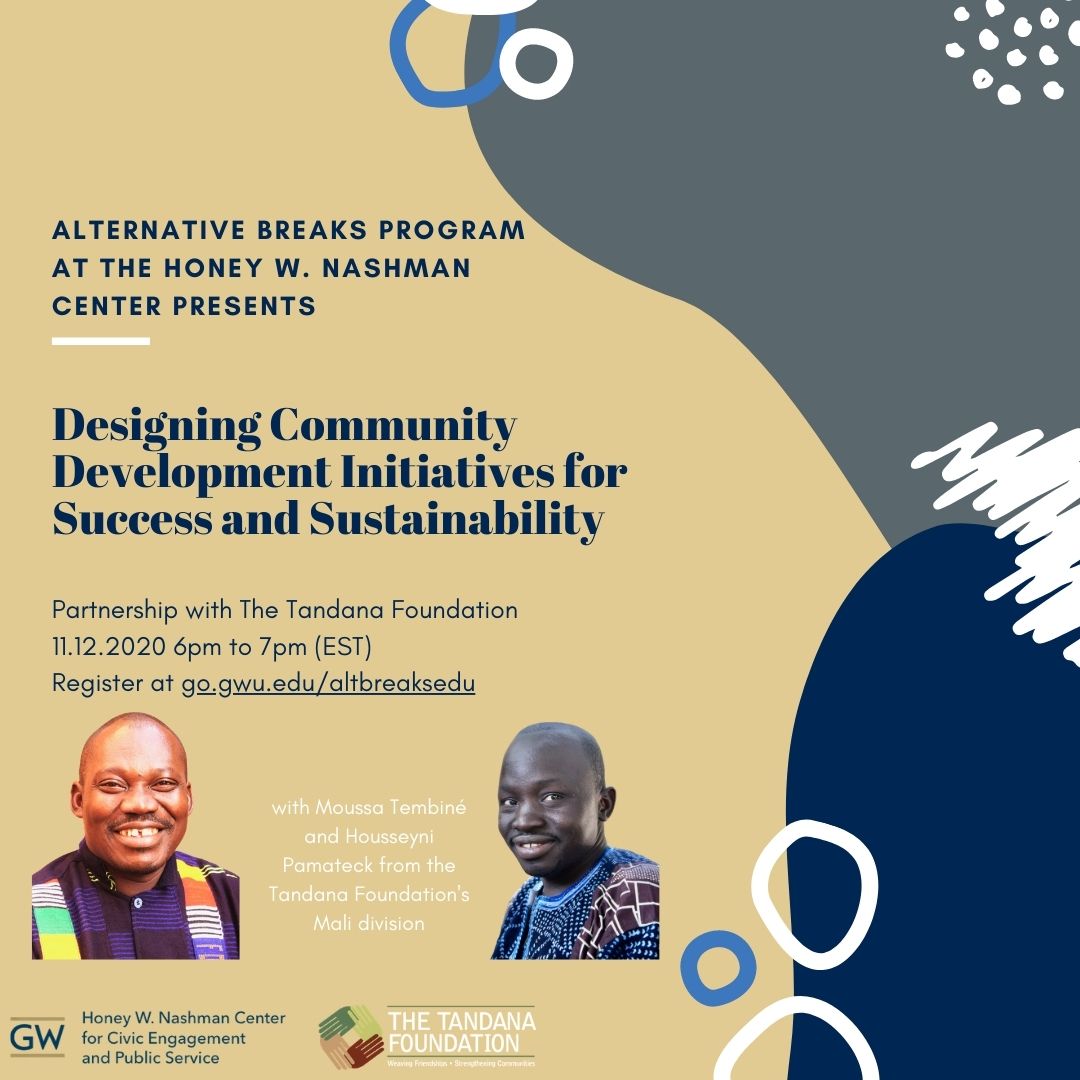
Designing Community Development Initiatives for Success and Sustainability

  • Moussa Tembiné

  • Housseyni Pamateck

Disrupting Market Injustices through Collaborative Enterprises

  • Moussa Tembiné

  • Hawa Yalcouyé

  • Kessia Kouriba

Intercultural Public Heath Work in rural Ecuador

  • Maria Esther Manrrique

  • Leo Fuerez

Community-Based Public Health Work in rural Mali

  • Deboura Tembiné

  • Ambara Kassogué
  • Housseyni Pamateck

Kichwa Language Valorization and Revitalization

  • Santiago Gualapuro

  • Segundo Moreta

  • Luzmila Zambrano

  • Fabian Pinsag

Creating the first written materials in the Tommoso language

  • Moussa Tembiné

  • Boureima Yalcouyé

  • Kessia Kouriba

  • Hawa Yalcouyé
  • Jacob Tembiné

Bilingual Education in Ecuador

  • Segundo Moreta

  • Fabian Pinsag
  • Luzmila Zambrano

Adult Literacy Education in Mali

  • Moussa Tembiné

  • Boureima Yalcouyé

  • Kessia Kouriba

  • Hawa Yalcouyé

  • Jacob Tembiné

  • Housseyni Pamateck

Transforming Gender Dynamics through Women's Leadership Programs in Rural Mali

  • Kessia Kouriba

  • Hawa Yalcouyé

  • Moussa Tembiné

Gender Dynamics and Women's Roles in Rural Ecuador


  • Gladys Perugachi

  • Verónica Pazmiño

  • Luzmila Zambrano

  • Margarita Fuerez

Community-based Environmental Conservation and Regeneration

  • Moussa Tembiné
  • Ousmane Tembiné
  • Housseyni Pamateck
  • Matias Perugachi

Andean Philosophy, Cosmovision, Cosmopraxis

  • Segundo Moreta
  • Luzmila Zambrano
  • Willak Santillán

Medicinal and Traditional Food Plants in Ecuador

  • José Maria Fuerez

  • Alexandra Aguilar
  • Santos Quilumbango

Climate Change Adaptation in Ecuador

  • Galo Perugachi

Climate Change Adaptation in Mali

  • Moussa Tembiné

Community-Based Entrepreneurship

  • Claudia Fuerez

  • Kessia Kouriba

  • Hawa Yalcouyé
  • Alexandra Aguilar

Community-Based Tourism

  • Claudia Fuerez

  • Alexandra Aguilar

  • Luzmila Zambrano

  • Mauricio Bonilla

Community-Centered Engineering and Project Design

  • Rockey Anderson

  • Moussa Tembiné

  • Housseyni Pamateck

Andean Medicine and Intercultural Medicine in Ecuador

  • Rosa Colta
  • Santos Quilumbango
  • Vicente Pazmiño
  • Willak Santillán
  • Kaya Alta
  • Maria Esther Manrrique

Author Talks

  • Laura Resau (Q&A session, free)

  • Maria Virginia Farinango
  • Santiago Gualapuro

  • Segundo Moreta

  • Claudia Fuerez

Transnational NGOs and Indigenous Cultures

  • Anna Taft

Decolonizing Transnational Collaboration

  • Anna Taft
  • Moussa Tembiné
  • Margartia Fuerez

Engaging with Communities through Action

  • Anna Taft

Between Development and Disengagement

  • Anna Taft

Trilingual Storybooks: Creating Literature in Tommoso and Kichwa

  • Segundo Moreta
  • Moussa TEmbiné

Supporting Food Security in Mali

  • Housseyni Pamateck
  • Moussa Tembiné

Supporting IDPs in Mali

  • Moussa Tembiné
  • Housseyni Pamateck
  • Hamidou Yalcouyé

Indigenous Justice in Ecuador

  • Fabian Perugachi
  • Luis Yepez


Additional topics and themes available by request.  Let us know what you are looking for, and we will see if we can provide a talk on that theme.


Speaker bios:

Alexandra Aguilar

Alexandra is President of Pakarinka Women’s Association, an active member of the community council of Agato, Ecuador, and a workshop leader on topcis such as traditional medicine, Andean worldview, and other topics related to Kichwa culture.  She has worked with the Ministry of Social Inclusion and

 the Wambrakuna Foundation to support community efforts. 

Kaya Alta

Kaya Alta, M.D. is an indigenous doctor of general medicine from Cotacachi, Ecuador, who has investigated relationships between indigenous midwifery knowledge and Western birthing practices.  She has managed the Barrio Medical Strategy for Cotacachi Canton and practiced medicine at the Cotacachi Hospital.  She is also a leader of K’allam’p, an indigenous organization that is opening a new birthing clinic to support local midwives. 

Mauricio Bonilla

Mauricio is a Kichwa Otavalo tour guide with professional training in tourism.  He has worked as a community tour guide, focusing on tourism that is respectful toward both cultural and natural resources.  Growing up in an indigenous family, he came to appreciate the significance and importance of the practices and traditions of his culture and developed a desire to share this knowledge with a wider audience.

Rosa Colta

Rosa Colta is the head midwife at the Ministry of Health hospital in Otavalo, Ecuador.  This hospital is widely known for its traditional birthing unit, where pregnant mothers can receive the support of a midwife skilled in local medicine practices and can choose vertical birth.  Rosa also performs ceremonies and rituals, in addition to healing traditional illnesses, such as bad air. 

Maria Virginia Farinango

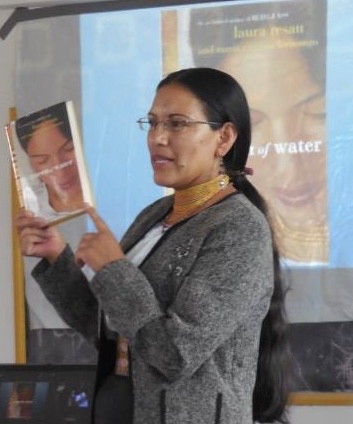
From Gualsaqui, Ecuador, Maria Virginia co-wrote the novel The Queen of Water with Laura Resau, based on the true story of her childhood and adolescence.  The book shares her struggle to achieve education and also to find a place between two cultures.  She has a Master’s degree in psychology and practices in Otavalo, where she lives with her husband and two children. 

Claudia Fuerez

Claudia is the founder of Kawsaymi, a family business dedicated to sharing cultural experiences with tourists, while preserving and valorizing Kichwa Otavalo customs and culture, particularly through food.  Passionate about promoting the identity and cuisine of her culture, Claudia earned a bachelor’s degree in Hospitality and Tourism and worked for a variety of hotels and a language school before focusing on her own community tourism business with her family. 

Leo Fuerez

Leo is a primary care technician working at the rural health center in Gualsaqui, Ecuador.  Born in one of the indigenous communities served by the center, he is serves as a liaison between two communities and the Ministry of Health.  He has been part of teams from the health center that have visited patients in their homes during the pandemic, as well as the mobile clinic teams of The Tandana Foundation.

José Maria Fuerez

From the community of Panecillo, Ecuador, José Maria is a farmer and father of five.  He has always sought to teach his children love for their cultural roots and pass down knowledge he learned from his parents.  Using the agricultural calendar he learned from his parents, based on the sky and moon, he farms not only for his family but also for their business, Kawsaymi, a community tourism enterprise and cooking school.  He gives tours of hits garden, explaining the medicinal uses of various plants, as well as demonstrating the value of ancestral food crops, some of which have been largely abandoned by the community. 

Margarita Fuerez

In 2007, Margarita received a scholarship from Tandana that helped her finish high school. A few years later, she became Tandana's first university scholarship recipient (studying Accounting and Auditing at the UNIANDES University) and pioneered the community service requirement of Tandana's scholarship program. Margarita began working with Tandana's Electronic Medical Record System in September 2015, and once that work was complete, she has continued to use her sharp mind and cheerful disposition to keep Tandana's programs in Ecuador running smoothly and its accounting in order.

Santiago Gualapuro

Santiago Gualapuro is from the community of Gualapuro near Otavalo, Ecuador. He is the first generation of Kichwa from his community to have accessed higher education. After earning a Bachelor’s in Science in Agricultural Business from the Universidad San Francisco in Quito, he spent some time in Canada where, in conjunction with other Canadian linguists, he authored the first Kichwa-English dictionary. From there, he earned a Masters in Linguistics from the University of Texas at Austin, a Masters in Hispanic Linguistics at Ohio State University, and he is currently a Ph.D. student at Ohio State University.  He is now working together with the foundation to launch prizes for students who write their theses in Kichwa through the Killkashun project, Killkashun meaning “Let’s write.”

Ambara Kassogué

Ambara is the laboratory director at Hopital du Mali in Bamako, a hospital built through Chinese-Malian cooperation.  He has an associate’s degree in agronomy, a bachelor’s degree in microbiology and biochemistry, and a master’s degree in biotechnology.  Ambara coordinates all of the laboratory operations, research, and lab personnel for the hospital and is responsible for COVID-19 testing and follow up with patients who have been isolated.

Kessia Kouriba

Kessia is committed to being a role model and a leader for other women. She has worked as a literacy instructor for Tandana since 2014, teaching in several villages in Wadouba, Ségué-Iré , and Ondogou Townships. She enjoys learning about the different cultures and customs in the villages she visits. Prior to working for Tandana, Kessia spent two years working for the Evangelical Development Agency of Mali as a teacher for their Strategic Program for Accelerated Schooling/Gateway Program. Kessia obtained her high school diploma in human science and is from the village of Kansongo.

Maria Esther Manrrique

Maria Esther has served as an auxiliary nurse at the rural health center in Gualsaqui, Ecuador for 27 years.  As a compassionate and skilled nurse of indigenous heritage, Maria Esther has earned the trust of her many patients.  She has been part of teams from the health center that have visited patients in their homes during the pandemic, as well as the mobile clinic teams of The Tandana Foundation.

Segundo Moreta

Growing up in Rey Loma, Ecuador, Segundo did not learn Kichwa as a child, but as an adult he became passionate about the language of his people.  He teaches Kichwa language and Andean worldview at the high school level and seeks every opportunity to revitalize the language and culture of his people.  He is the author of the trilingual children’s book Juanita the Colorful Butterfly.

Housseyni Pamateck

After earning a bachelor’s degree in Geographical Development from the University of Social Sciences and Management in Bamako, Housseyni took on the role of Local Supervisor for Tandana, He organizes meetings, assemblies, and discussions, shepherding each project from the selection of priorities through the planning and implementation to the follow up to ensure that its positive impact is sustained.  He participated in a special commission to address an outbreak of COVID-19 in Segué-Iré Township, Mali. 

Verónica Pazmiño

Verónica Pazmiño is Tandana’s Scholarships Coordinator, and she empathizes with students in the program because she has dealt with the same issues scholarship students face. Verónica grew up in Panecillo, Ecuador and developed a love for English, which she got to practice when Anna Taft lived with her family in 1998. She went on to work as an English teacher while continuing her education at the Polytechnic Army University. In 2008, Verónica began interpreting for Tandana's health care volunteers and since then has supported Tandana in innumerable ways. Verónica enjoys helping community members with projects, sharing her customs and traditions with the volunteers, and learning more English.

Vicente Pazmiño

Vicente Pazmino has lived in Panecillo, Ecuador his entire life, and he has dedicated much of his time and energy to bettering his community. Along with his father, Vicente was instrumental in the installation of the Panecillo Regional Potable Water System, which serves five communities. His mother, Clemencia Morales, was a famous mestiza healer.  She taught Vicente how to heal, and some of her patients still visit him to be cured.  Vicente also serves on the community health committee of the local government health center, so he has familiarity with both local and Western medicine in the area.

Galo Perugachi

With a degree in environmental management, Galo has been working at the weather station in Inguincho, Ecuador since he was twelve years old.  Over the years, he has learned how to use new technologies to record the weather, and he has noticed many changes in the data he collects.  Through this experience, he has become an advocate for awareness of climate change and for environmental conservation. 


Gladys Perugachi

Gladys Perugachi is a former Tandana scholarship student who earned a law degree, and now runs her own law firm “Perugachi and Associates” in Otavalo, Ecuador. From her studies and personal life experiences she has gained a comprehensive understanding of gender dynamics in Kichwa culture. She delves into themes such as public health, community politics, education, and more to explain how gender and social dynamics have evolved over time and shaped the present day situation.

Fabian Pinsag

Fabian has a degree in intercultural bilingual education and works for Ecuador’s Ministry of Social Inclusion in early childhood bilingual education and also orienting parents about wholistic care for their children.  He has served as President of his community Muenala, Ecuador and coordinated intercultural activities with community members and Tandana volunteers.

Santos Quilumbango

Santos is a yachak, a practitioner of local medicine, from San Juan Alto, Ecuador.  He is a member of Consejo Yachak Runa Amazonas del Ecuador, an association of yachaks, and has participated in meetings of Andean healers from different regions.  He works with medicinal plants, candles, dreams, and ayahuasca. 

Laura Resau

Laura Resau is the author of several highly praised novels, including The Queen of the Water, which she co-authored with Maria Virginia Farinango of Otavalo, Ecuador, about Maria Virginia’s experiences growing up, as well as The Lightning Queen, Star in the Forest, Red Glass, and What the Moon Saw. She is also the author of the acclaimed notebook series, which includes: The Indigo Notebook, The Ruby Notebook, and The Jade Notebook. Laura's books have garnered many state and library awards, as well as multiple starred reviews. She lives in Fort Collins, Colorado, and donates a portion of her royalties to indigenous rights organizations.

Virginia Sánchez

Virginia's knowledge of Ecuador's health system, gained from 15 years as a financial controller for the Ministry of Public Health, is invaluable in her position as Patient Follow up Coordinator at The Tandana Foundation. In addition to working for the Ministry of Public Health, she has managed a pharmacy in Ecuador. She has coordinated Tandana’s support for the Ministry of Health during the pandemic.

Willak Santillán

Willak is from the community of Agato, Ecuador.  He comes from a long line of yachaks, who have transmitted local knowledge and wisdom to him through many generations.  When he was thirteen, he became very curious about ways of understanding life, and he traveled to meet with elders from different cultures who reinforced and expanded what he had learned from his own family. 

Anna Taft

Anna earned a bachelor’s degree from Whitman College with honors in Politics and a minor in environmental studies. After graduation, she worked for The Traveling School, teaching Spanish, history and literature to high-school students in the Andes and New Zealand.  Anna founded Tandana to increase opportunities for intercultural sharing and to support community initiatives envisioned by her friends in Ecuador and Mali.  For the last thirteen years, she has led the foundation in its partnership with communities in Mali and Ecuador.  She also holds a Master’s of Arts in Liberal Studies from Skidmore College with a focus on Morality in a Pluralistic World.

Deboura Tembiné

A midwife assistant, currently studying to become a Health Technician, Deboura has worked at a local health center in Bandiagara District for five number of years.  Having grown up in the village of Kansongo, Deboura is familiar with the challenges rural residents face in accessing health care. 

Jacob Tembiné

A teacher with first responder training, Jacob has led The Tandana Foundation’s COVID-19 education team and has personally provided support and follow up to Segue-Iré Township, Mali during the COVID-19 outbreak there.  Jacob is also president of AFTCD/PD (Literacy, Training, Translation, and Document Coneception of Dogon Country), a linguistic association that has taken the lead in developing written materials in Tommo So, and a former literacy instructor.

Moussa Tembiné

As Mali Program Manager for The Tandana Foundation, Moussa applies his deep familiarity with the languages, culture, customs, and social organization of Bandiagara District to the coordination of successful projects. Before joining Tandana at its inception, he worked for over 10 years with a wide variety of development NGOs, including Action Mopti, Amprode Sahel, and PRBP (Projet de Rehabilitation des Barrages et Pistes), in addition to serving the government of Mali as a Superior Agricultural Technician.  As he completed a bachelor’s degree in Community Development, Moussa wrote a thesis on the challenges, successes, and determining factors of grain banks in Wadouba Township.


Ousmane Tembiné

An elementary school teacher from Kansongo, Mali, Ousmane is Secretary of the Olouguelemo Environmental Association, which has brought together 19 villages to work together on environmental conservation initiatives.  The Association has delineated protected forest areas, acquire training in Assisted Natural Regeneration of trees, created two tree nurseries, produced efficient cookstoves to reduce the demand for firewood, constructed stone contour lines for erosion control, and leads a reforestation campaign each year. 

Boureima Yalcouyé

An accountant by trade, Boureima is a founding member of AFTCD/PD (Literacy, Training, Translation, and Document Coneception of Dogon Country), a linguistic association that has taken the lead in developing written materials in Tommo So.  He has also participated in workshops sponsored by SIL to standardize the writing of Tommo So.

Hawa Yalcouyé

Originally from Nalou, Mali, Hawa attended primary school in Kilegou, secondary school in Ningari, and earned a bachelor's degree from the university in Bamako. She had not had a chance to use her degree for employment until she became a literacy instructor for The Tandana Foundation in 2019.  Since then she has been teaching women literacy and numeracy in the Tommo So language and helping to lead women’s leadership workshops. 

Luzmila Zambrano

Luzmila is the General Coordinator of the Otavalango Living Museum in Otavalo, Ecuador, where she leads tours, organizes cultural events, and teaches Kichwa classes.  She was instrumental in organizing a group of 20 families to take over the former textile factory where their parents had been forced to work and convert it into a living museum celebrating their culture. 


Academic Courses


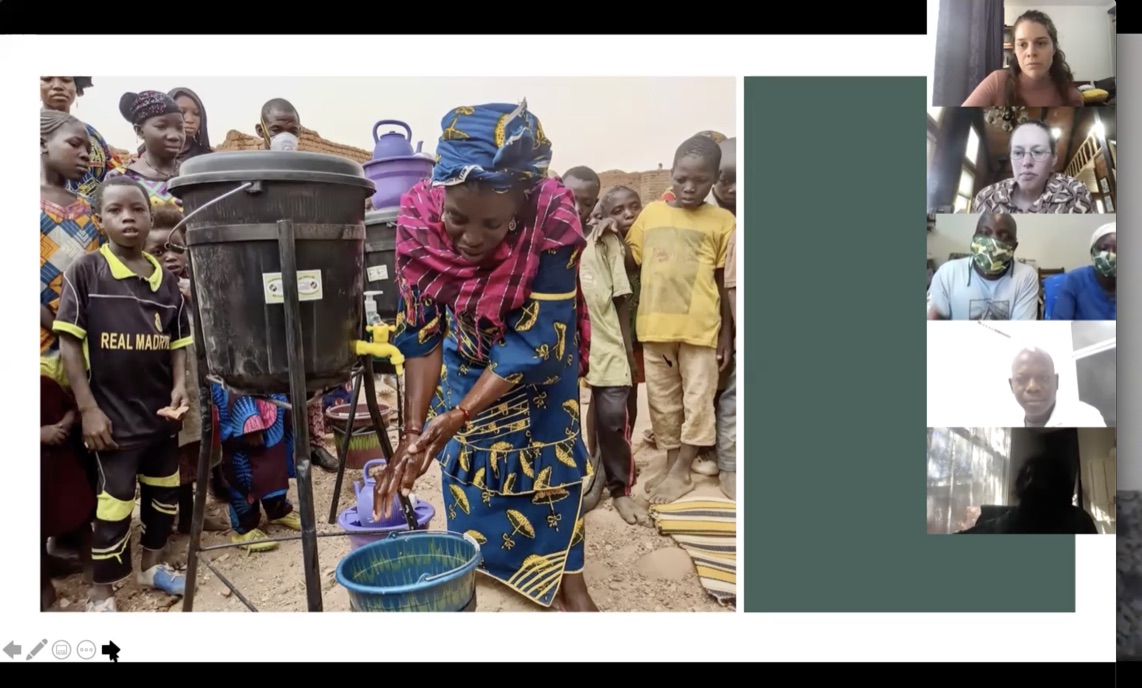
The Tandana Foundation can also work with you to design online academic courses for your university or high school students.  These courses combine readings and online discussion with presentations from many local leaders from Mali and Ecuador.  Students have a chance to hear directly from local people involved in work related to the course theme, ask questions, and reflect on comparisons between their own experiences and those of the speakers.  Below are examples of 1-credit courses we have taught for Whitman College.  Contact us at info [at] tandanafoundation.org to discuss developing a course for your institution.  Fees vary, depending on length and dynamics of the course. 


Health in Ecuador and Mali: Pandemic, Race, Culture


This is a 1 credit, remote-learning workshop for students on the intersections of the COVID-19 pandemic, race, and culture and their effects on health in two different global contexts: Ecuador’s Otavalo Canton and Mali’s Bandiagara District.  Drawing on the insights of a variety of speakers from both Ecuador and Mali, this course will address issues in the experience of the pandemic, encouraging students to draw comparisons between their own experiences and those of speakers from these two very different contexts.  It will also address intersections of race and culture with health care more generally.  Themes will include scarcity of resources for mitigating the pandemic, relationships between government ministries, NGOs, and other actors, data and reporting, and cultural factors affecting response to COVID-19, as well as relationships between Western and local medicine in both contexts, racial disparities in access to health care in Ecuador, and transnational collaborations on health care work. 


Class dynamics will include Zoom meetings with live presenters from Ecuador and Mali, Zoom discussions, readings, videos for students to watch, and a chat discussion board.  Tandana will provide simultaneous interpretation for presenters.


Course Outline

1.     Introductions and Expectations

a.     Student introductions

b.     Course expectations

c.     Introduction to Tandana, Otavalo, and Bandiagara

2.     Experience of the pandemic in Otavalo

a.     Ministry of Health, NGOs, resources, data, and communication

b.     Experiences from the field in local health work

c.     Cultural debates regarding response to the pandemic

3.     Experience of the pandemic in Bandiagara

a.     Ministry of Health, NGOs, resources, data, and communication

b.     Experiences from the field in local pandemic response

c.     Cultural debates regarding response to the pandemic

4.     Race, culture, and access to health care in Ecuador

a.     Relationships and collaborations between "traditional" and Western medicine

b.     Disparities and barriers in access to health care

c.     Transnational collaborations on health care – Tandana and Ministry of Health

5.     Geography, culture, and access to health care in Mali

a.     Relationships between "traditional" and Western medicine

b.     Disparities and barriers in access to health care

c.     Transnational collaborations on health care – China and Ministry of Health

6.     Final class discussion

a.     Comparisons and connections between Ecuador, Mali, and U.S.

b.     Students give oral presentations with comparative analysis


Educators (see bios on Speakers' Bureau tab):

  • Anna Taft, instructor
  • Nicole Melendez, teaching assistant
  • Max Chauvet, interpreter
  • François Chauvet, interpreter
  • Gabriela Cleefi, interpreter
  • Virginia Sánchez
  • Leo Fuerez
  • Vicente Pazmiño
  • Ambara Kassogué
  • Housseyni Pamateck
  • Jacob Tembiné
  • Santos Quilumbango
  • Rosa Colta
  • Maria Esther Manrrique
  • Moussa Tembiné
  • Deboura Tembiné


Strengthening Indigenous Languages: Tommo So and Kichwa


This is a six-week, 1 credit, remote-learning workshop for students on the variety of activities, efforts, and dynamics involved in valorizing, revitalizing, and writing the Kichwa and Tommo So Languages. Drawing on the insights of a variety of speakers from both Ecuador and Mali, this course will address issues in the contemporary dynamics and valorization efforts of the Kichwa and Tommo So languages.  Themes will include developing and standardizing writing systems for oral languages, developing educational materials and books, teaching local languages to various audiences, personal significance of valorizing one’s own language, resources and partnerships for linguistic work, multilingualism, and community language dynamics. 


Class dynamics will include Zoom meetings with live presenters from Ecuador and Mali, Zoom discussions, readings, online language lessons, videos for students to watch, and a chat discussion board.  Tandana will provide a combination of simultaneous and consecutive interpretation for presenters, in order to give students varied linguistic experiences.


Course Outline

1.     Introductions and expectations

2.     Tommo So, oral to written language

a.     Introduction to Tommo So

b.     Process of creating and refining writing system

c.     Christian evangelism, SIL, and small languages

d.     Value of writing and goals for the future

3.     Teaching in Tommo So

a.     Developing the literacy program

b.     Value of learning in one’s own language

c.     Experiences from the field

4.     Kichwa, standardizing writing and creating materials

a.     Introduction to Kichwa

b.     Unified Kichwa

c.     Creating books, dictionaries, and other materials

5.     Teaching Kichwa and community dynamics

a.     Intercultural bilingual education

b.     Resistance to speaking Kichwa

c.     Personal importance of using Kichwa

d.     Teaching Kichwa to foreigners

6.     Translation exercise and final discussion

a.     Students present translation projects

b.     Comparisons and reflections


Educators (see bios on Speakers' Bureau tab):

  • Anna Taft, instructor
  • Nicole Melendez, teaching assistant
  • François Chauvet, interpreter
  • Gabriela Cleefi, interpreter
  • Santiago Gualapuro
  • Segundo Moreta
  • Boureima Yalcouyé
  • Moussa Tembiné
  • Kessia Kouriba
  • Fabian Pinsag
  • Luzmila Zambrano
  • Hawa Yalcouyé
  • Bodi Ouologuem


Climate Change in the Sahel: Local Adaptations


Drawing on the insights of a variety of speakers from Mali and Burkina Faso, this course will address issues in the experience of climate change in a particular locality, encouraging students to draw comparisons between their own experiences and those of speakers from a different context.  It will also address intersections of climate change with issues of justice, demography, migration, conflict, cooperation, traditions, and modernity.  Themes will include effects of climate change in Bandiagara District and the Sahel more broadly; the interaction of climate change, demography, and violent conflict; local adaptation initiatives and their challenges and successes; managing conflicts regarding natural resources, and the intersections of traditions and modernity with adaptation initiatives.  It is a five-week, 1 credit, remote-learning workshop for students on the effects of climate change in the Sahel, and particularly in Mali’s Bandiagara District, as well as local initiatives to adapt to climate change, the intersections of demography, climate change, and conflict, and challenges to implementing adaptations as well as successful changes that have been achieved.


 Course Outline

1.    Introductions and Expectations

       a.     Student introductions

       b.     Course expectations

       c.     Introduction to Bandiagara, the Sahel, and Tandana

2.   Effects of climate change, demography, and conflict in Bandiagara

       a.     Local effects of changing climate conditions

       b.     Intersections of climate change and demography

       c.     Intersections of climate change and conflict

3.   Local climate adaptation initiatives

       a.     Olouguelemo Environmental Association

       b.    Water resources more generally

       c.     Grain banks

       d.     Gardens

4.   Managing Conflicts, Traditions, and Modernity

       a.     Moving from competition to cooperation through creating an association

       b.     Gaining legal management rights to natural resources

       c.     Challenges and successes in changing customs to regenerate the environment

5.   Final class discussion


Educators (see bios on Speakers' Bureau tab):

  • Anna Taft, instructor

  • Nicole Melendez, teaching assistant

  • El Hadj Djitteye

  • Kessia Kouriba

  • Housseyni Pamateck

  • Madjalia Seynou

  • Moussa Tembiné

  • Ousmane Tembiné

  • François Chauvet, interpreter


Andean and Western Healthcare in Otavalo, Ecuador


Drawing on the insights of a variety of speakers from Otavalo and Cotacachi Cantons, Ecuador, this course will address issues in Andean concepts of health and healing, complementarity and hybridization among Andean and Western health care practices, giving birth at intersections of Andean and Western healthcare, and Andean medicine in tourism and popular culture.  Themes will include relationships and interactions between Western and Andean medicine in several contexts, notions of race and culture in Ecuador, and the complexities involved in sharing Andean practices with other cultural audiences.  We will draw comparisons at the levels of ontology, epistemology, ethics, politics, and economics between various approaches to health and well-being that shape practice in the Otavalo area.s


Course Outline

  1. Introductions and Expectations

    1. Student introductions

    2. Course expectations

    3. Introduction to Tandana and Otavalo

  2. Andean concepts of health and healing

    1. Physical and spiritual health

    2. Different healing techniques

    3. When to consult Western medicine, when to use Andean healing

  3. Collaborations and intersections of Andean and Western medicine

    1. Jambi Huasi clinic

    2. Influences of Andean medicine in Western medical settings

    3. Access to Western medicine for indigenous Ecuadorians

  4. Giving birth at the intersection of Andean and Western healthcare

    1. The creation of the traditional birthing unit at the Otavalo hospital

    2. The creation of the new midwifery center in Cotacachi

    3. Experiences working in these units

    4. Blanqueamiento, mestizaje and giving birth

  5. Andean medicine in tourism and popular culture

    1. Andean healing demonstrations for tourists

    2. Images of Andean medicine in popular culture

    3. Andean medicine and government

  6. Final Presentations and Discussion


Educators (see bios on Speakers' Bureau tab):

  • Anna Taft, instructor

  • Nicole Melendez, teaching assistant

  • Gaetan Moussa, teaching assistan

  • Kaya Alta

  • Rosa Colta

  • Maria Esther Manrrique

  • Vicente Pazmiño

  • Javier Perugachi

  • Santos Quilumbango

  • Willak Santillán

  • Luzmila de la Torre

  • Gabriela Cleefi (interpreter)


Virtual Immersion


You can arrange a 2-4 day virtual "immersion" opportunity for your group or class.  These online immersions include an orientation session from Tandana Program Coordinators, a cultural activity each day, a speaker each day, interaction with Ecuadorians, and reflection activities facilitated by Tandana Program Coordinators.  We also provide additional resources to help you prepare, integrate this experience into your curriculum, and extend the learning opportunities after your immersion.  Contact us at info [at] tandanafoundation.org for more details and to design a customized program for your class or group.


Student Exchanges


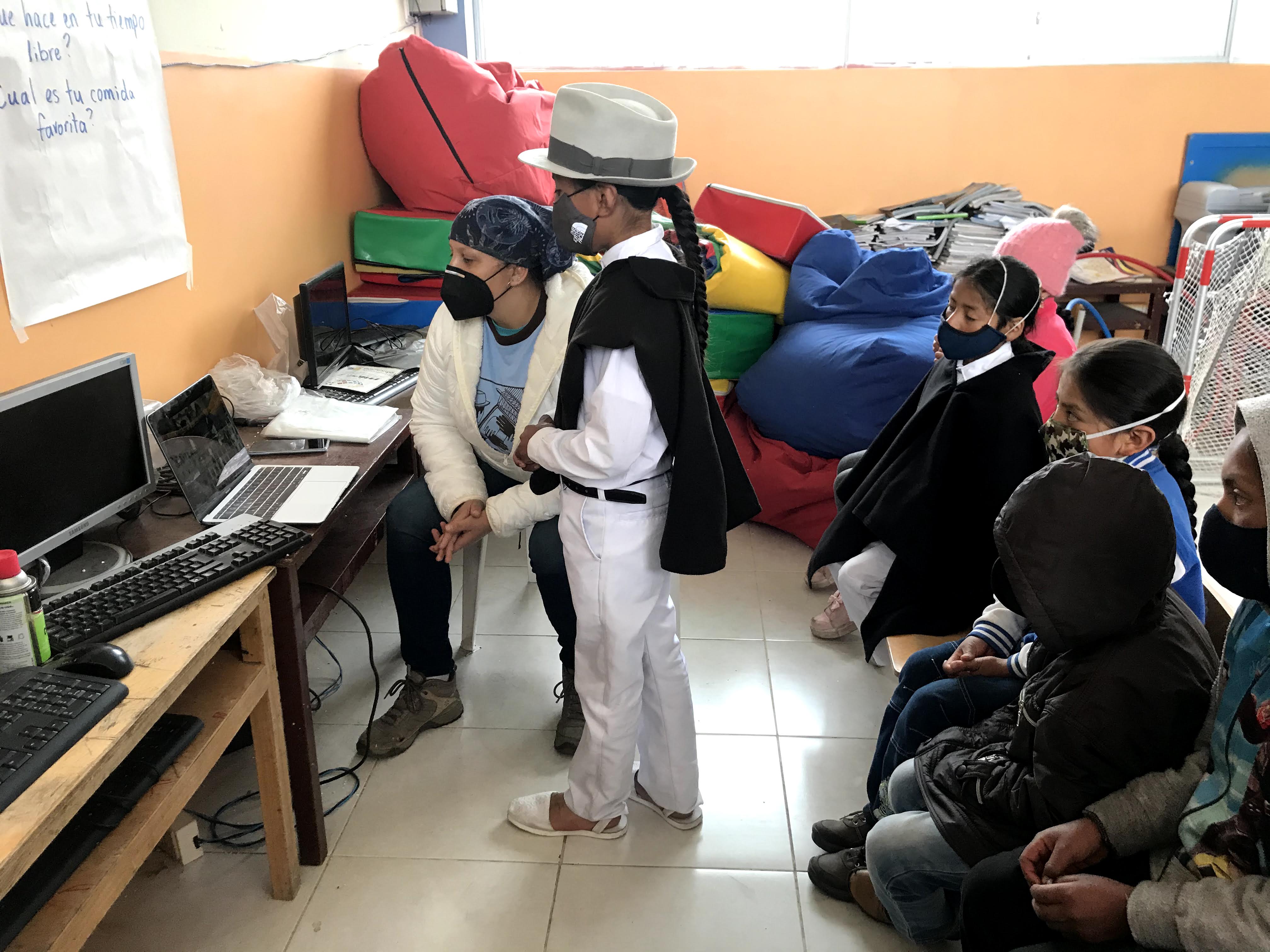
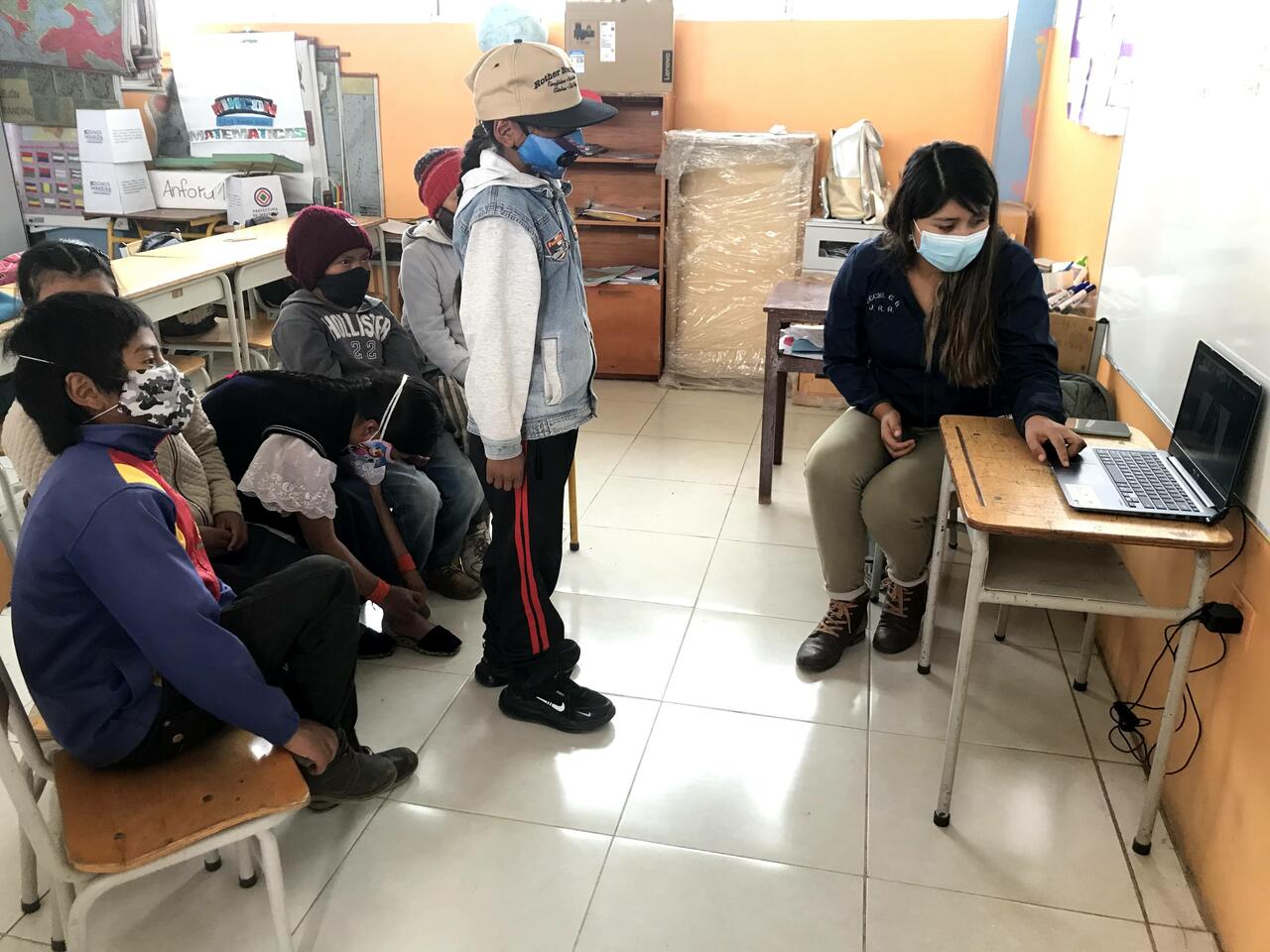
The Tandana Foundation offers remote student exchange experiences for your class.  Even if you can’t travel, your students can interact in multiple ways with Ecuadorian peers, as they learn from each other and build global understanding.  Your students can practice their Spanish and help their Ecuadorian peers practice English.  They can learn about daily life and many aspects of Kichwa Otavalo culture, in addition to reflecting on their own daily lives and culture as they share with others.  They can compare social issues in their own community with those in a rural Ecuadorian community.  They can even do a joint research, creative, or fundraising project.  Our goal is to foster mutual sharing based on equitable relationships.  Joint student sessions can be integrated into your course periodically over a semester or more frequently for a week or two.  Students can also communicate by WhatsApp in between Zoom sessions.  Together, we can build global connection and awareness, even without travel. Contact us at info [at] tandanafoundation.org to make arrangements.


Suggested Donation:

If your institution is able, we ask you to support this program by making a donation to cover internet costs for the Ecuadorian students and administrative work for Tandana.  Recommendation is $10-15 per Ecuadorian student per session. 


Activities:

  • Meet and greet, with suggested questions and prompts

  • Sharing daily life and cultural activities

      • Agriculture

      • Cooking

      • Dress

      • School

      • Chores

      • Community layout and points of interest

    • Language practice and tutoring

    • Social issues, justice, and identity discussions

    • Joint research projects

    • Joint creative projects

    • Joint fundraising projects


Stories


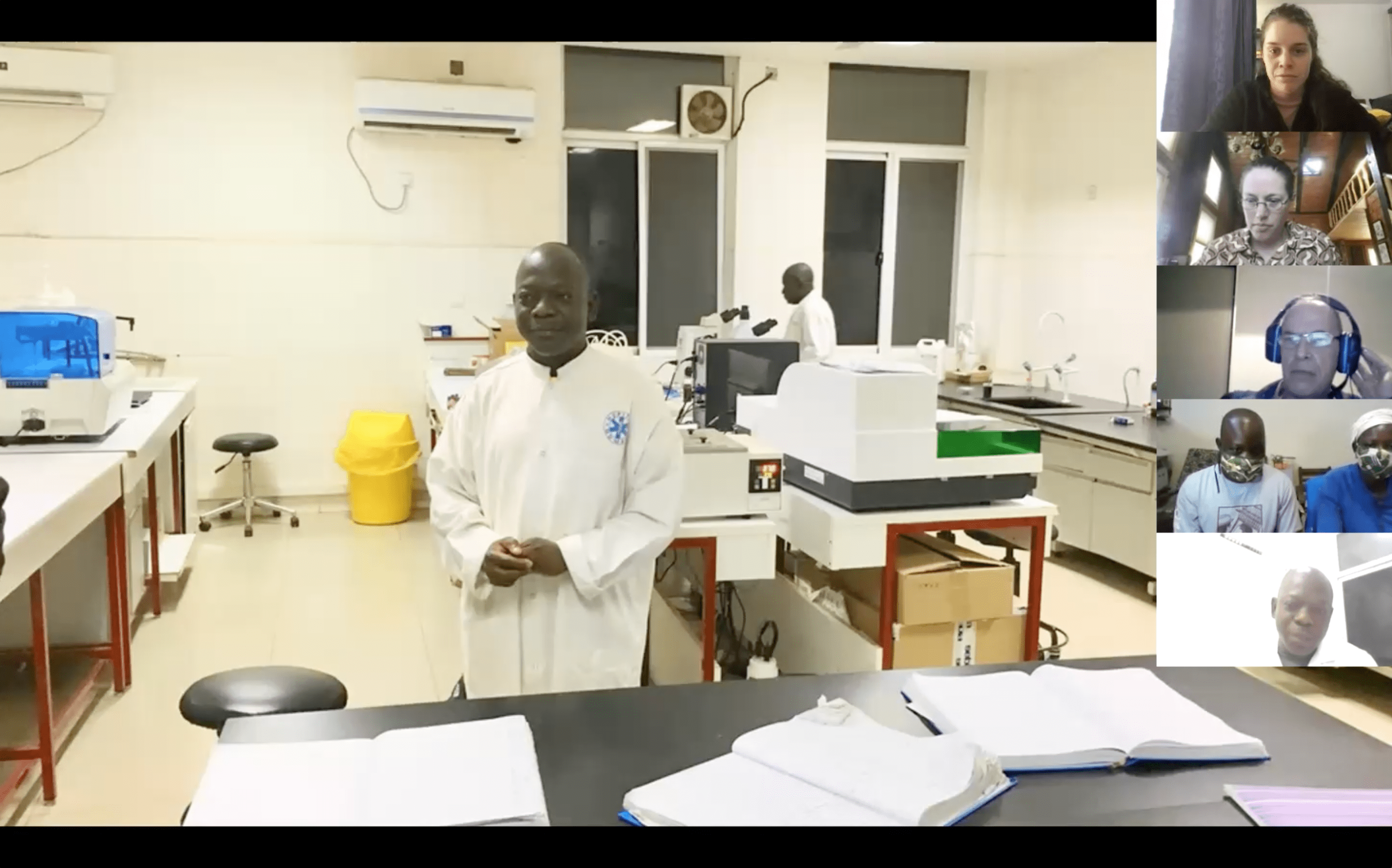
Tandana’s Founding Director facilitates enriching course on climate change in the Sahel for Whitman College students

For many years, The Tandana Foundation has witnessed the impact of climate change in the Bandiagara District of Mali: increased deforestation and desertification that contributes to food insecurity and the need for new water resources. As a result, the organization helped launch, and now supports the village-run Olouguelemo Environmental Association, which continues to grow (now 24 villages) and carries out many important and highly successful environmental conservation projects in the region.
More...
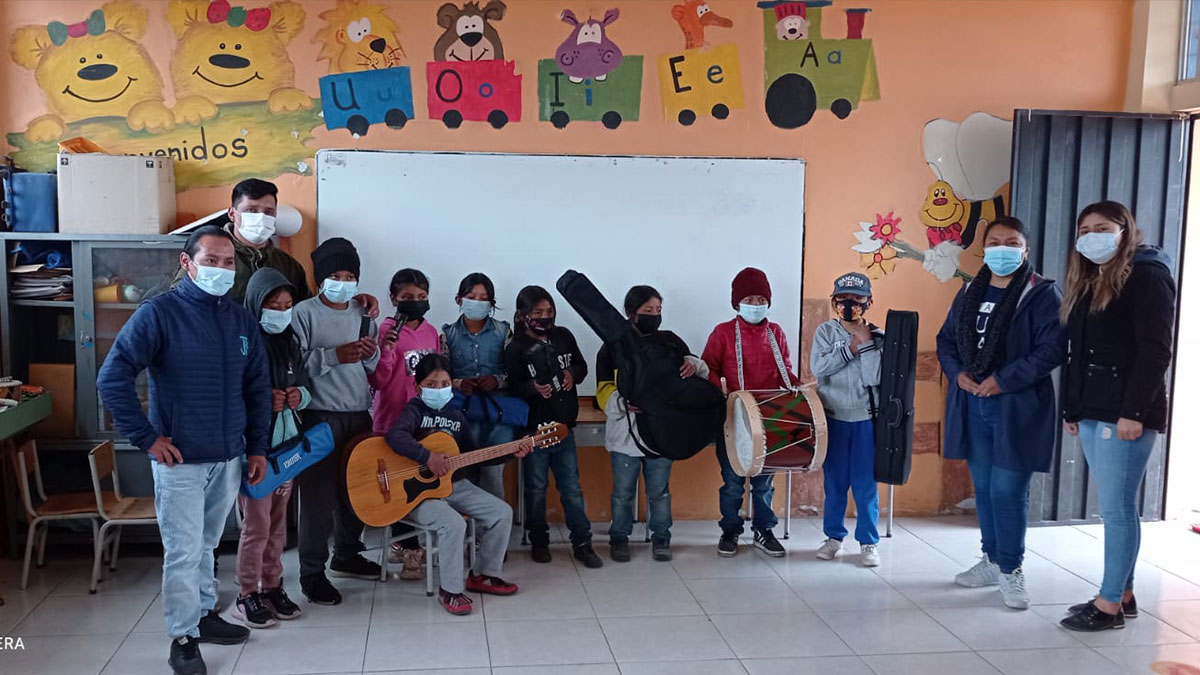
American and Ecuadorian students work together to raise money for music and art supplies for a school in Ecuador

After participating in a virtual exchange program organized by The Tandana Foundation, students from Sharon High School in Massachusetts in the United States were motivated to launch a months-long fundraising effort for and with their new friends at the Jaime Roldos Aguilera Intercultural Bilingual school in Urkusiki, Ecuador.
More...

A shared philosophy of mutual support and learning

All program coordinators dedicated to social justice and civic engagement are faced with the challenges of community engagement and community building due to the pandemic’s social distancing requirements. How do you connect with others and make substantive change in your community without being able to interact with others or physically enter into a community? My response: we must expand our definition of community.
More...

Bringing global perspectives and multiple forms of knowledge to higher education

Thanks to sponsorship by the O’Donnell Visiting Educator Program and the Center for Global Studies at Whitman College, Associate Professor of Biology Leena Knight and Founding Director of The Tandana Foundation, Anna Taft (Whitman ‘02), organized a course titled Health in Ecuador and Mali: Pandemic, Race, Culture that took place remotely this fall for Whitman College students.
More...

How friendship saves cultures

Despite the pandemic restricting the ability to see one another in person, students at Sharon High School in Massachusetts in the United States and the Jaime Roldos Aguilera Intercultural Bilingual school in Urkusiki, Ecuador, have still become friends – sharing their cultures, favorite activities, and pets with one another by sending each other videos and participating in regular Zoom calls.
More...

Show more...


The Tandana Foundation Nonprofit Overview and Reviews on GreatNonprofits

External link opens in new tab or windowExternal link opens in new tab or window


  Copyright 2006-2026, All Rights Reserved, The Tandana Foundation  |  501(c)(3) non-profit | EIN: 20-4748423

 2933 Lower Bellbrook Rd., Spring Valley, OH 45370  |  (937) 862-0202  | info [at] tandanafoundation.org


External link opens in new tab or window External link opens in new tab or window External link opens in new tab or window External link opens in new tab or window External link opens in new tab or window 

  • Donate
  • Contact Us
  • Diversity
  • Privacy
Powered by SiteKreator
close lightbox